



How to Stop Bedwetting: Effective Treatments for Enuresis
Bedwetting in children can be treated with several approaches, including bedwetting alarms, changes to daily routines, and sometimes medication. The most suitable treatment depends on your child’s age and the underlying causes of bedwetting. Bedwetting alarms are among the most effective treatments for achieving long-term dryness, helping children gradually learn to stay dry at night.
Treatment options for nighttime bedwetting
Bedwetting can be frustrating for children and exhausting for parents. Interrupted nights, wet sheets and
worries about sleepovers can affect the whole family.
The good news? Bedwetting is common, treatable, and most children can achieve dry nights.
With the right support and treatment, your child can build confidence and take positive steps towards staying dry at night.
The best approach depends on the cause of the bedwetting, the child’s age, and how much it affects daily life. Common treatment options include:

1. Addressing underlying causes
Sometimes bedwetting is linked to physical factors, such as bladder problems, constipation, or increased urine production at night. Emotional stress or major life events can also contribute, especially in cases of secondary bedwetting. A healthcare professional can help identify possible causes and recommend appropriate support.

3. Lifestyle adjustments
Simple changes can sometimes support treatment. Going to the toilet before going to sleep, drinking enough during the day, avoiding large amounts of fluid shortly before bedtime and maintaining healthy bowel habits can support dry nights.
2. Bedwetting alarms
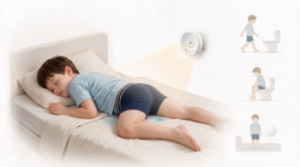
A bedwetting alarm is one of the most effective long-term treatments for nighttime bedwetting. A bedwetting alarm detects the first drops of urine and wakes the child before the bladder fully empties. Through repeated training, the child learns to recognise the signal from a full bladder and wake up to go to the toilet.

4. Medication
In some cases, a doctor may prescribe medication to reduce urine production during the night. This can be helpful in specific situations, for example for sleepovers or when other treatments have not been successful.
Medication should always be discussed with a healthcare professional.
1. Addressing underlying causes
Sometimes bedwetting is linked to physical factors, such as bladder problems, constipation, or increased urine production at night. Emotional stress or major life events can also contribute, especially in cases of secondary bedwetting. A healthcare professional can help identify possible causes and recommend appropriate support.
2. Bedwetting alarms
A bedwetting alarm is one of the most effective long-term treatments for nighttime bedwetting. A bedwetting alarm detects the first drops of urine and wakes the child before the bladder fully empties. Through repeated training, the child learns to recognise the signal from a full bladder and wake up to go to the toilet.
3. Lifestyle adjustments
Simple changes can sometimes support treatment. Going to the toilet before going to sleep, drinking enough during the day, avoiding large amounts of fluid shortly before bedtime and maintaining healthy bowel habits can support dry nights.
4. Medication
In some cases, a doctor may prescribe medication to reduce urine production during the night. This can be helpful in specific situations, for example for sleepovers or when other treatments have not been successful.
Medication should always be discussed with a healthcare professional.
Does bedwetting go away by itself?
For many children, bedwetting improves naturally as they grow older. However, waiting is not always the best option, especially if bedwetting affects a child’s confidence, social activities, or family life.
If your child continues to wet the bed regularly after the age of 5, it is worth exploring treatment options. A positive approach can help children regain confidence and develop nighttime bladder control.
Bedwetting alarms: helping children learn nighttime bladder control
At Rodger, we believe that children can learn to recognise their body’s signals and gain confidence in managing nighttime bladder control.
Our wireless bedwetting alarm system is designed to support children with nocturnal enuresis in a gentle and effective way. During bedwetting alarm training, your child learns to respond to the feeling of a full bladder and wake up before wetting the bed.
This process does not happen overnight. Like learning any new skill, it takes practice and consistency. Many families notice improvements within the first few weeks, and for many children, nighttime accidents become less frequent over time.
Bedwetting alarm training typically takes several weeks to several months, depending on the child and their situation.
How does bedwetting alarm training work?
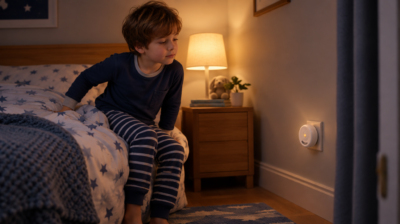
A bedwetting alarm consists of a moisture sensor, sensor briefs and an alarm that alerts the child when urine is detected. Over time, the child’s brain learns to connect the feeling of a full bladder with waking up and going to the toilet.
You can read more about bedwetting alarm training and the science behind it in our detailed guide.

Helping your child understand bedwetting
Talking openly about bedwetting can make a big difference. Children often feel relieved when they understand that they are not alone and that bedwetting is not their fault.
We created a special information page for children to help explain:
- Why bedwetting happens
- How a bedwetting alarm works
- How children can work towards staying dry at night
Start your child’s journey towards dry nights
With the right support and training, children can regain confidence and take control of nighttime bedwetting.
A good night’s sleep is possible — for your child and for the whole family. Rodger offers several products that can be used to overcome bedwetting. With our wireless bedwetting alarm, nighttime bedwetting can soon be a thing of the past. Our bedwetting alarm system is easy to use and helps children develop nighttime bladder control. With bedwetting alarm training, your child learns to notice the urge to urinate.
With Rodger, your child can develop better bladder control. Rodger wishes you and your family a good night’s sleep!
Always consult a healthcare professional for an accurate diagnosis and treatment advice regarding enuresis nocturna.