



Nighttime Bedwetting: Why Does My Child Wet the Bed?
If your child wets the bed at night, you are not alone. Nighttime bedwetting, also known as nocturnal enuresis, is a common problem among children. Many children continue to wet their bed while sleeping, even after they are old enough to understand toilet training.
Bedwetting is not caused by laziness or a lack of effort. In most cases, a child simply does not wake up when their bladder is full. So do not worry! With the right support and treatment, most children overcome bedwetting over time.
Around 5–10% of children older than five years experience regular nighttime bedwetting. Doctors generally use the term enuresis nocturna when a child aged five or older involuntarily urinates during sleep at least once or several times per week.
What is enuresis nocturna?
Enuresis nocturna is the medical term for involuntary urination during sleep after the age at which nighttime bladder control is normally expected. It mainly affects children, but it can also occur in adolescents and adults. The medical term for daytime wetting is diurnal enuresis.
Bedwetting is not a disease, children with nocturnal enuresis are usually healthy, but it can have a significant emotional impact on children and their families. Feelings of shame, frustration, or anxiety can occur, especially when children compare themselves with peers.
Bedwetting occurs worldwide and can affect children from all cultures and backgrounds.
What causes nighttime bedwetting?
Many parents wonder: Why does my child wet the bed at night?
A common misconception is that bedwetting happens because a child drinks too much before bedtime or sleeps too deeply. While these factors can sometimes play a role, they are usually not the main cause.
In most cases, nighttime bedwetting happens because the communication between the bladder and the brain is not fully developed yet. The bladder sends a signal that it is full, but the child does not wake up to go to the toilet.
Bedwetting is usually caused by a combination of factors, including:
- Delayed development of bladder control
- A smaller functional bladder capacity
- Increased urine production during the night
- Hormonal factors
- Genetic predisposition
- Stress or emotional events

Gender also plays a role in nocturnal enuresis. In a large American study of children between 8 and 11 years old, it was found that over 6% of boys and 2.5% of girls was still wetting the bed at night. Boys have also been found to have more severe bedwetting than girls.
The same study also found that there is a link between attention-deficit/hyperactivity disorder (ADHD) and bedwetting.
The role of hormones in bedwetting
One factor involved in nighttime bedwetting is the hormone antidiuretic hormone (ADH). This hormone helps regulate how much urine the body produces, especially during the night.
Some children with enuresis nocturna produce less ADH at night, meaning their kidneys continue producing a larger amount of urine while they sleep. If the bladder fills beyond its capacity and the child does not wake up, bedwetting can occur.
Because several factors can contribute to bedwetting, healthcare professionals often look at both physical and emotional factors when assessing a child.
Is bedwetting hereditary?
Yes, genetics can play an important role in enuresis nocturna.
Research has shown that children are more likely to wet the bed if one or both parents experienced bedwetting during childhood. This can actually be encouraging for children: many parents who wet the bed themselves eventually became dry at night.
Knowing this can help parents reassure their child that bedwetting is something they can overcome. So talking with your child about your personal experiences with bedwetting can be very supportive for your child.

Primary enuresis nocturna
Primary enuresis nocturna means that a child has never been consistently dry at night for a period of six months or longer.
This is the most common form of bedwetting and is usually related to the normal development of bladder control and waking responses during sleep.
Secondary enuresis nocturna
Secondary enuresis nocturna occurs when a child starts wetting the bed again after being dry at night for at least six months.
This type of bedwetting is often linked to a significant change or stressful event, such as:
- Moving house
- Divorce or family changes
- Starting a new school
- Illness or emotional stress
- The loss of a loved one
Secondary bedwetting should always be discussed with a healthcare professional to rule out possible underlying causes.
Bedwetting is common and treatable
Nighttime bedwetting can be challenging for children and families, but it is important to remember that your child is not the only one nor is it doing this on purpose.
With patience, encouragement, and appropriate support, most children eventually become dry at night. The most important thing parents can do is provide reassurance and avoid punishment or shame. A positive approach helps children build confidence while working towards staying dry.
What is the best treatment for bedwetting?
Fortunately, bedwetting can be treated. The right approach depends on the child’s age, motivation, and possible causes.
The most effective treatment depends on the individual child. Common approaches include:

Behavioural strategies
Supportive routines can help children develop better nighttime bladder habits:
- Going to the toilet before bedtime
- Drinking enough during the day
- Keeping a positive attitude
- Tracking progress
- Rewarding effort rather than only dry nights
Bedwetting alarms
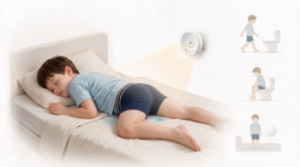
A bedwetting alarm is considered one of the most effective long-term treatments for nocturnal enuresis.
The alarm detects moisture when urination starts and wakes the child. Over time, the brain learns to recognize bladder signals and wake up before an accident happens.

Medication
In some cases, doctors prescribe medication such as desmopressin to reduce urine production during the night.
Medication can be useful in specific situations but does not teach the child to recognize bladder signals in the same way as alarm training.
Learn more about how to stop bedwetting.
Learn more about bedwetting alarm training.
Always consult a healthcare professional for proper diagnosis and treatment advice regarding enuresis nocturna.